
Playing the jaw harp – The comprehensive guide for beginners & advanced players
The Little Jaw's Harp School...
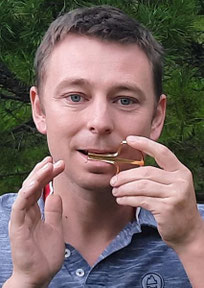
How to hold the jaw harp correctly in your hand
Hold the jaw harp in your hand, but do not squeeze the metal frame or touch the instrument's steel tongue.
Place the instrument against your upper and lower teeth, with the plucking bar on the outside. Do not open your mouth too wide, but the spring must be able to swing freely between your slightly parted teeth—therefore, do not clench your teeth.

Playing the jaw harp - coaxing sounds from it
Gently place your lips on the jaw harp, keeping your teeth open.
Strike the spring with your index finger – pluck it (the spring can be plucked both outwards and inwards).
The vibration produces a unique, wonderful tone (like a tuning fork).
Different tones can be produced by widening or narrowing the mouth cavity and by moving your tongue.
Learning to play the jaw harp – tradition, technique and tonal variety
The jaw harp is one of the oldest musical instruments in the world and is currently experiencing a true renaissance. More and more people are searching for "how to play the jaw harp" to learn this fascinating instrument themselves. On this page, you'll find everything you need to know about playing the jaw harp – from the correct posture and playing techniques to tips for beginners.
What is a jaw harp?
The jaw harp (also known as the mouth harp, mute, or mute) is a traditional plucked instrument played using the mouth as a resonating chamber. Its characteristic sound is produced by the vibration of the tongue (feather) and by deliberately altering mouth shape, breathing, and tongue position.
Playing the jaw harp has a centuries-old tradition, particularly in Austria, especially in the Alpine region.
Learning to play the jaw harp – here's how it works
1. The correct handling
To play the jaw harp correctly:
- Hold the frame firmly between your thumb and forefinger.
- Place the jaw harp loosely against your teeth or lips.
- Make sure your tongue can move freely.
Important: Your teeth only serve as support – do not bite down!
2. Create the fundamental tone
The first step in learning to play the jaw harp is the fundamental tone:
- Pluck the spring sideways with your finger.
- Keep your mouth slightly open.
- Breathe calmly through your nose.
You can already hear the typical jaw harp sound.
3. Shaping sounds with the oral cavity
The real magic of playing the jaw harp comes from:
- Changing the mouth opening
- Moving the tongue
- Vowels like A, E, I, O, U
- Rhythmic breathing technique
This is how melodies, overtones, and rhythms are created.
Playing the jaw harp for beginners – tips
If you're just starting out with the jaw harp:
- Practice for 5–10 minutes daily
- Start slowly and rhythmically
- Listen to experienced players
- Use mirrors or video recordings to check your form
Patience is key – learning to play the jaw harp takes time, but rewards you with unique sounds.
Advanced playing techniques
Once you've mastered the fundamental tone, you can:
- Play polyphonic overtones
- Use rhythmic patterns
- Use breathing and throat techniques
- Combine the jaw harp with other instruments
Professional players use the jaw harp today in folk music, world music, jazz, meditation, and contemporary music.
Which jaw harp is the right one?
Quality is crucial for a good playing experience. Hand-forged jaw harps – like those traditionally crafted in our workshop – offer:
- Precise tuning
- Pleasant playing feel
- Durability
- Rich overtone sound
👉 At maultrommel.at you will find high-quality jaw harps for beginners and professionals.
Why play the jaw harp?
Playing the jaw harp offers many advantages:
- Promotes breath control and a sense of rhythm
- Has a calming and meditative effect
- Is easy to transport
- Combines tradition with modern music
No other instrument produces such a profound sound with so little effort.
Frequently Asked Questions about Playing the Jaw Harp (FAQ)
Is playing the jaw harp difficult?
No. The basics are easy to learn; depth comes with practice.
Can anyone play the jaw harp?
Yes – regardless of age or prior musical experience.
How long does it take to learn to play the jaw harp?
The first notes and sounds are often achieved after just a few minutes.
Conclusion: Playing the jaw harp – an experience for body and mind
Playing the jaw harp is a fascinating fusion of music, rhythm, and tradition. Whether you're a beginner or an advanced player, this instrument will open up a whole new world of sound.
👉 Discover handcrafted jaw harps and accessories now at www.maultrommel.at and start your musical journey.
𝄞 Tuned jaw harps in all keys from A1 to d3
Immerse yourself in the world of jaw harp sounds. Each of our handcrafted jaw harps is precisely tuned – from a deep, warm C to a bright, clear D. Every tuning has its own unique timbre and expressive power.
On our sound sample page, you can listen to each key directly, compare them, and choose the perfect jaw harp for your music.
Whether for meditative sound journeys, folk music traditions, or modern sound experiments, our precisely crafted jaw harps offer a unique, harmonious sound in every key. Discover how the tone changes through mouth shape, tongue movement, and breathing technique – and experience the full range of this fascinating instrument.

Maultrommelmanufaktur & Traditionshandwerk
WIMMER-BADES
Im Sperrboden 1
A-4591 Molln
Share the Page / Teile unsere Seite:
Find us /
Finde uns:

